
What Is Digital Printing in Packaging? A Complete Guide
Digital printing in packaging is transforming how brands bring products to market. Unlike traditional printing technologies, digital printing requires no plates, cylinders, or lengthy setup processes. Instead, it transfers digital files directly onto the substrate, allowing brands to produce short runs, personalised designs, and rapid prototypes with speed and precision that conventional methods simply cannot match. As consumer demand for variety, personalisation, and faster time-to-market continues to grow, digital printing in packaging has moved from a niche solution to a mainstream production method across food, beverage, pharmaceutical, and e-commerce sectors.

Key Advantages of Digital Printing in Packaging
The absence of physical printing forms means zero makeready investment per job, significantly lowering the cost barrier for short-run work.
Without plate production or press setup time, digital jobs can move from file approval to printed output in hours rather than days or weeks.
Changing a design, adding a language variant, or updating regulatory information requires only a file revision — not a new set of plates.
Digital printing reaches colour quality from the very first impression, eliminating the substrate waste associated with makeready and colour matching on conventional presses.
Digital presses can print unique barcodes, QR codes, serial numbers, or personalised content on every single impression, something analogue printing cannot do.
What Is Digital Printing in Packaging?
Digital printing in packaging is a process in which a digital image file is sent directly to a press that applies ink or toner to the substrate without the need for physical printing plates or engraved cylinders. The press reads the file and recreates the image electronically, impression by impression.
The two dominant digital printing technologies used in packaging today are inkjet and electrophotography (also known as toner-based digital printing). Both methods offer the same core advantage: the ability to switch designs between jobs instantly, with no makeready costs and minimal waste.
Digital printing is used across labels, folding cartons, flexible packaging, corrugated displays, and direct-to-shape containers, making it one of the most versatile methods available to modern brand owners and converters.
How Digital Printing in Packaging Works
Inkjet Digital Printing
In inkjet digital printing, microscopic droplets of ink are ejected from print heads directly onto the substrate surface. High-resolution inkjet presses used in packaging can produce extremely fine detail and vibrant colour at speeds that continue to improve with each new generation of equipment. UV-curable and water-based inkjet systems are both widely used, with UV variants offering instant curing and strong adhesion on non-absorbent substrates such as films and foils.
Electrophotographic (Toner-Based) Printing
Electrophotographic printing uses electrically charged toner particles that are attracted to a drum carrying the image, then transferred and fused to the substrate under heat and pressure. This technology is mature and highly reliable for labels and folding cartons, delivering consistent, sharp output with excellent colour gamut reproduction.
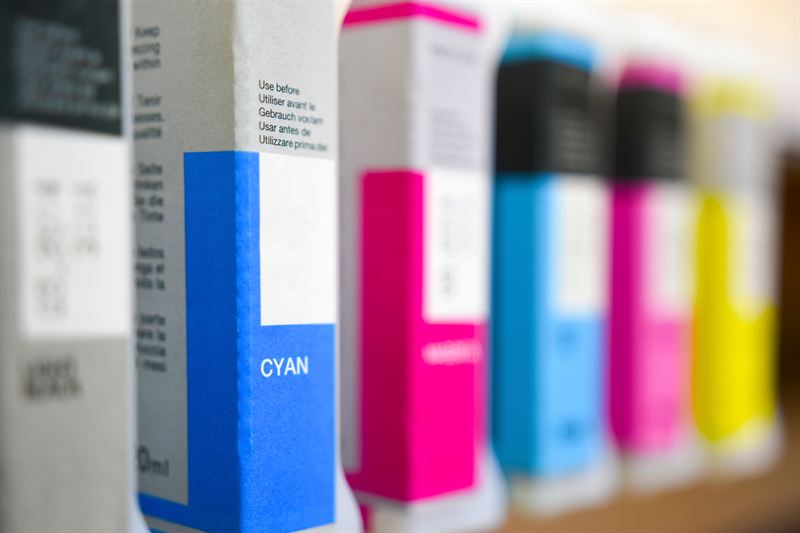
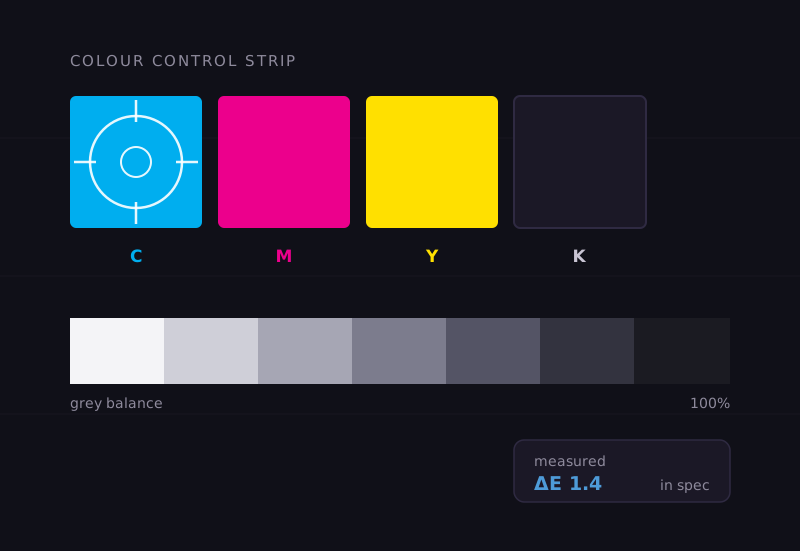
Both processes produce colour by combining cyan, magenta, yellow, and black (CMYK), with extended gamut and spot colour simulation options increasingly available on premium digital presses.
Common Applications of Digital Printing in Packaging
Digital printing has found a strong foothold across a wide range of packaging formats.
Get Expert Printing & Packaging Solutions
Whether you are exploring digital printing for a new product launch, a short-run packaging project, or a personalisation campaign, choosing the right printing partner makes all the difference. Our team specialises in matching brands with the most suitable printing technology for their volume, timeline, and quality requirements — across digital, flexographic, and gravure. Contact us today to discuss your packaging brief and receive expert guidance tailored to your specific needs.
Conclusion
Digital printing in packaging has permanently changed what brands can achieve without large upfront investments or lengthy lead times. Its combination of zero plate costs, instant design flexibility, variable data capability, and fast turnaround makes it the natural choice for short runs, product launches, and personalised campaigns. As the technology continues to advance — with faster press speeds and wider substrate compatibility — digital printing will take on an even larger share of packaging production worldwide. Understanding its strengths and limitations ensures you can use it to its full advantage.
Digital Printing vs. Flexographic and Gravure Printing
digital offers lower setup costs and faster turnaround on short runs, but flexo remains more cost-effective per unit at high volumes with stable designs.
digital removes the cylinder engraving investment entirely and enables rapid design changes, but gravure holds a clear advantage in image quality consistency and cost efficiency on very large, long-running print programmes.
Understanding where digital printing fits helps brands choose the most appropriate technology for each project.
The most forward-thinking brands today use digital and conventional printing in combination — digital for short runs, product launches, and seasonal variants; flexo or gravure for core, high-volume SKUs.
Questions people ask
Digital printing in packaging is used for labels, folding cartons, flexible pouches and films, corrugated displays, and direct-to-shape containers. Its versatility across substrates continues to expand as inkjet and toner technologies improve.
Yes, many digital printing systems use inks that comply with food contact regulations, including low-migration UV inks. It is important to confirm compliance with your press supplier and ensure the ink system meets applicable standards such as those set by the Swiss Ordinance or FDA guidelines.
Digital printing is most cost-effective for print runs below approximately 5,000 to 10,000 units, though this threshold varies by substrate and press. Above this volume, conventional methods such as flexographic printing typically offer a lower cost per unit.
Modern digital presses with extended gamut printing can simulate a high percentage of the Pantone colour range using CMYK plus additional channels such as orange, violet, and green. However, some highly saturated or metallic spot colours may still require conventional printing or special effects finishing for an exact match.
Variable data printing on a digital press allows each impression to carry unique information — such as a serialised barcode, QR code, personalised name, or batch number generated from a connected database. The press reads the unique data for each unit and prints it in real time with no slowdown in production speed.
Keep reading
Questions about this guide?
Send me your question on WhatsApp and I will get back to you personally.