
What Is Gravure Printing? A Complete Guide for Packaging Professionals
Gravure printing is one of the oldest and most respected printing technologies still in active commercial use today. Known for delivering exceptional image reproduction and unwavering consistency across millions of impressions, it remains a cornerstone of high-quality flexible packaging, decorative laminates, and publication printing worldwide. If you work in packaging, brand management, or print procurement, understanding gravure printing helps you make more informed decisions about quality, cost, and production volumes. This guide covers what gravure printing is, how the process works, where it excels, and how it compares to other major printing technologies.

Key Advantages of Gravure Printing
The engraved cell structure allows gravure to reproduce smooth tonal gradients and fine photographic detail far more effectively than most other printing processes.
Once a cylinder is set up, gravure delivers near-identical results across millions of impressions with minimal variation a critical factor for global packaging brands.
Gravure presses run extremely fast, making them highly efficient for very large production volumes where speed translates directly into lower cost per unit.
Gravure prints effectively on thin plastic films, paper, metallic foils, and laminates, covering virtually all flexible packaging substrates.
Chrome-plated gravure cylinders can produce tens of millions of impressions before requiring re-engraving, offering long-term value on sustained product lines.
What Is Gravure Printing?
Gravure printing is an intaglio printing process in which an image is engraved directly into the surface of a metal cylinder typically copper, later chrome-plated for durability. The engraved cells in the cylinder hold ink, which is then transferred to the substrate as the cylinder rotates under pressure.
Unlike relief printing methods such as flexographic printing, gravure prints from recessed areas rather than raised ones. This fundamental difference gives gravure its signature advantage: the ability to reproduce extremely fine detail, smooth tonal gradients, and photographic-quality imagery with remarkable consistency.
Gravure printing is widely used for flexible packaging films, tobacco packaging, decorative laminates, wallcoverings, gift wrap, and high-circulation publications such as magazines and catalogues.
How Gravure Printing Works
The gravure process is precise, repeatable, and engineered for high-volume output.
Cylinder Engraving
At the heart of gravure printing is the engraved cylinder. Modern gravure cylinders are produced using electromechanical engraving or laser engraving, allowing microscopic cells to be cut into the copper surface with extraordinary precision. The depth and size of these cells determine the volume of ink transferred and therefore the density and tone of the printed image.
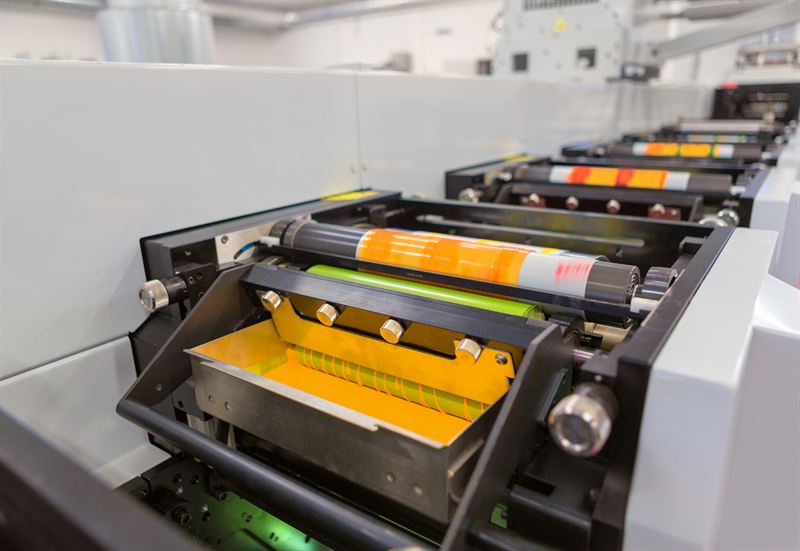
Each colour in a gravure job requires a dedicated cylinder. A typical packaging press runs four to eight cylinders for process and spot colours in a single pass.
Ink Transfer and Doctor Blade
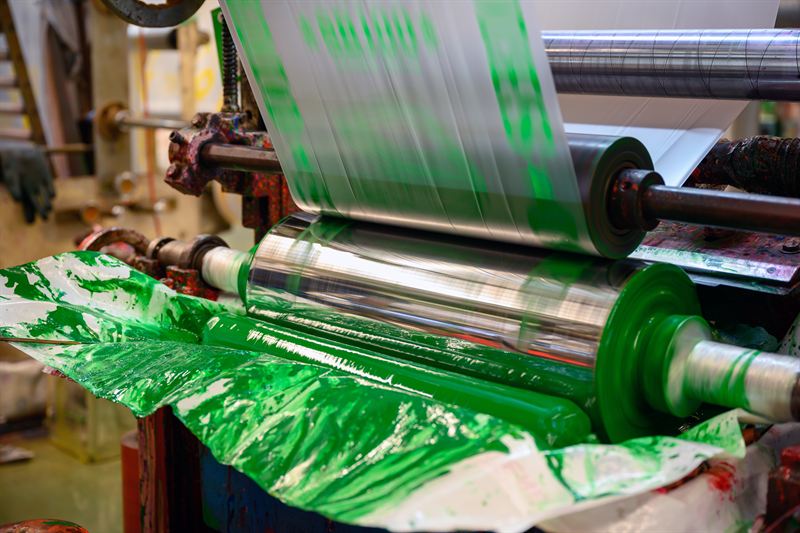
During printing, the cylinder rotates through an ink trough, filling every engraved cell with ink. A doctor blade then scrapes excess ink cleanly from the cylinder surface, leaving ink only within the engraved cells. The substrate whether film, paper, or foil is then pressed against the cylinder, drawing the ink out by capillary action and contact pressure.
This precise, metered ink delivery is a key reason gravure printing achieves such high colour consistency across enormously long print runs.
Common Applications of Gravure Printing
Gravure printing is the technology of choice wherever consistent, premium quality at high volume is non-negotiable.
Get Expert Printing & Packaging Solutions
Whether your packaging project demands the photographic precision of gravure printing or the flexibility of alternative processes, selecting the right technology is critical to your brand’s quality and cost targets. Our team has deep expertise across gravure, flexographic, and digital printing technologies and can help you evaluate the best fit for your product, volume, and budget. Get in touch to discuss your packaging requirements and receive tailored recommendations from specialists who understand the process inside and out.
Conclusion
Gravure printing has endured for good reason. Its ability to produce flawless, photographic-quality output at high speed and across very long print runs makes it the benchmark for premium flexible packaging and decorative printing. While the upfront investment in cylinder engraving is real, the unmatched consistency and quality that gravure printing delivers justify this cost for brands producing at scale. If you are evaluating printing technologies for a high-volume packaging project, gravure deserves serious consideration alongside flexo and digital alternatives.
Gravure Printing vs. Flexographic and Digital Printing
gravure delivers superior image quality and tonal range. However, flexo has significantly lower cylinder costs and faster job changeover, making it more economical for medium-volume or frequently changing designs.
gravure offers incomparably lower cost per unit at scale but carries high upfront cylinder engraving costs, making it poorly suited for short runs or variable data applications.
Gravure printing sits at a specific point in the competitive printing landscape.
The decision to use gravure printing typically comes down to three factors: very high print volumes, a requirement for premium image quality, and stable, long-running designs where cylinder investment is justified.
Questions people ask
Gravure printing is widely used for flexible packaging such as food pouches, snack films, and coffee bags, as well as tobacco packaging, decorative laminates, and high-circulation magazines and catalogues.
Gravure cylinders must be individually engraved for each colour, a precision process using copper and chrome. This upfront cost is higher than making flexographic plates, but the investment pays off over very large print runs where cost per unit drops significantly.
Standard gravure presses typically run four to eight colour stations in a single pass, supporting full-colour process printing plus spot colours for branding and special effects.
No. Gravure printing is most cost-effective for very large volumes — typically over one million linear metres or equivalent. For shorter runs, flexographic or digital printing offer much lower setup costs.
The engraved cylinder cells deliver a precisely controlled volume of ink to the substrate on every impression. Combined with a doctor blade that removes surface ink cleanly, this system produces repeatable, high-accuracy colour reproduction across the full length of any print run.
Keep reading
Questions about this guide?
Send me your question on WhatsApp and I will get back to you personally.