
What Is Flexographic Printing? A Complete Guide for Packaging Professionals
Flexographic printing is one of the most widely used commercial printing processes in the world. If you have ever held a cereal box, unwrapped a candy bar, or picked up a shopping bag, you have already encountered this technology in action. It powers the majority of flexible packaging, labels, corrugated boxes, and folding cartons produced globally each year. Understanding how flexographic printing works and why so many manufacturers rely on it can help you make smarter decisions when sourcing printing solutions for your products or business.

Key Advantages of Flexographic Printing
Flexo presses run at very high speeds, making them ideal for large-volume orders where cost per unit is a priority.
Unlike some printing methods, flexographic printing works across non-porous materials such as plastic films and metallic foils, not just paper and board.
Flexo accommodates water-based, solvent-based, and UV inks, giving printers the flexibility to meet varying regulatory requirements and performance specifications.
Many flexo presses integrate inline lamination, die-cutting, and finishing operations, reducing handling time and streamlining the entire production workflow.
Advances in plate-making technology, ink formulation, and press automation have brought flexo print quality significantly closer to gravure standards at a lower cost per print.
What Is Flexographic Printing?
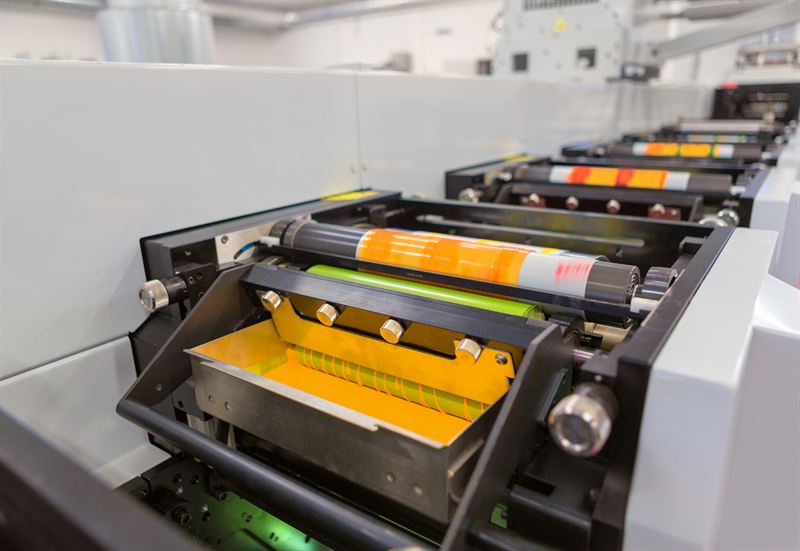
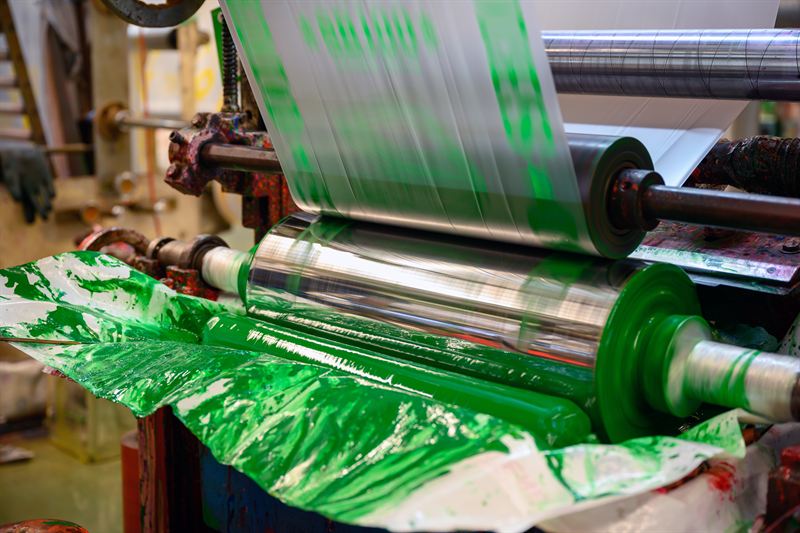
Flexographic printing, commonly known as flexo, is a rotary relief printing method that uses flexible photopolymer plates to transfer ink onto a wide range of substrates. These substrates include plastic films, paper, paperboard, metallic foil, and corrugated board.
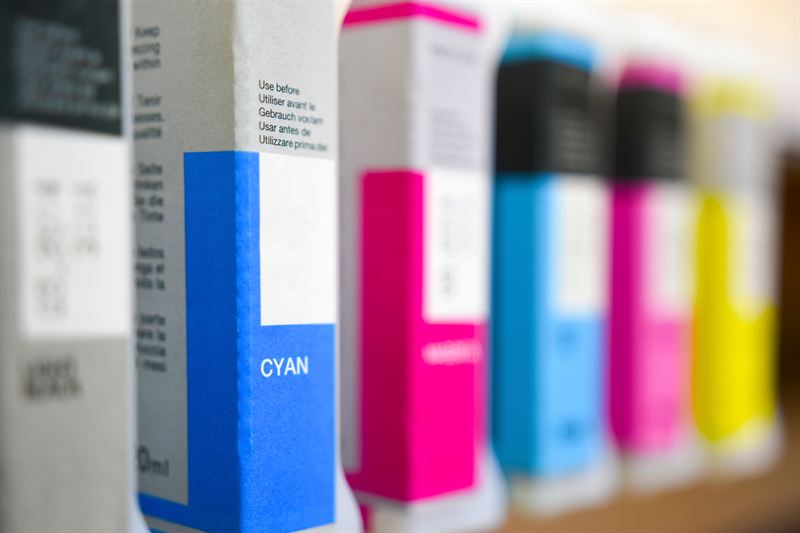
The process is built for high-speed, high-volume production runs. It supports a broad range of inks including water-based, solvent-based, and UV-curable formulations making it highly adaptable across different packaging and print applications.
Flexographic printing is particularly dominant in the flexible packaging sector, where speed, substrate versatility, and cost-efficiency are critical priorities for manufacturers and brand owners alike.
How the Flexographic Printing Process Works
Understanding the basic mechanics of flexo helps you determine whether it is the right fit for your production needs.
The Role of the Anilox Roll
The anilox roll is the core component of any flexographic printing system. This precision-engraved roller controls the exact amount of ink transferred to the printing plate. Its fine cell structure ensures consistent ink metering across every impression — essential for maintaining colour accuracy and print quality over long production runs.
Plate Making and Setup
Flexographic plates are made from photopolymer materials. A digital or analogue image is exposed onto the plate, creating raised relief areas that pick up ink and transfer it directly to the substrate. Digital plate-making now enables finer detail and tighter registration than traditional analogue methods.
During press setup, each colour requires a separate plate and printing station. Most modern flexo presses operate six to ten colour stations, allowing complex multicolour designs to be printed in a single pass through the machine.
Common Applications of Flexographic Printing
Flexographic printing serves a vast range of industries and product categories, including:
This breadth of application makes flexographic printing the preferred choice for businesses requiring consistent, scalable output across diverse packaging formats.
Get Expert Printing & Packaging Solutions
Whether you need flexible packaging, labels, corrugated cartons, or custom folding cartons, partnering with an experienced flexographic printing specialist makes a measurable difference in quality and consistency. Our team brings deep technical expertise across ink chemistry, plate technology, and substrate selection to every project. If you are evaluating printing options or scaling up your packaging production, contact us to discuss your specific requirements and explore solutions tailored to your business.
Conclusion
Flexographic printing remains one of the most important technologies in the global packaging industry for good reason. Its ability to print across diverse substrates, support multiple ink types, and deliver consistent quality at high speed makes it an outstanding choice for brands and manufacturers with large-volume packaging needs. As plate technology and ink formulation continue to advance, flexographic printing will only grow more capable and precise. Whether you are specifying packaging for the first time or reviewing your existing production process, a solid understanding of flexo gives you a stronger foundation for smarter decisions.
Flexographic Printing vs. Other Printing Methods
flexo offers lower plate costs and faster changeover times. Gravure still leads for extremely fine photographic reproduction on ultra-long runs, but flexo closes this gap every year.
flexo is far more cost-effective at scale. However, digital better suits short runs or jobs requiring variable data, such as personalised labels.
flexo handles a far wider range of substrates and is better optimised for continuous, high-volume packaging production.
Flexographic printing holds a distinct position when compared to alternative technologies.
For most mid-to-high volume packaging applications, flexographic printing delivers the best balance of quality, versatility, and total cost.
Questions people ask
Flexographic printing works on a wide range of substrates, including plastic films, paper, paperboard, metallic foil, and corrugated board. This versatility makes it one of the most adaptable commercial printing processes available today.
Flexo is best suited to mid-to-high volume production. Setup costs including plate-making make it less cost-effective for very short runs, where digital printing is typically a better and more economical choice.
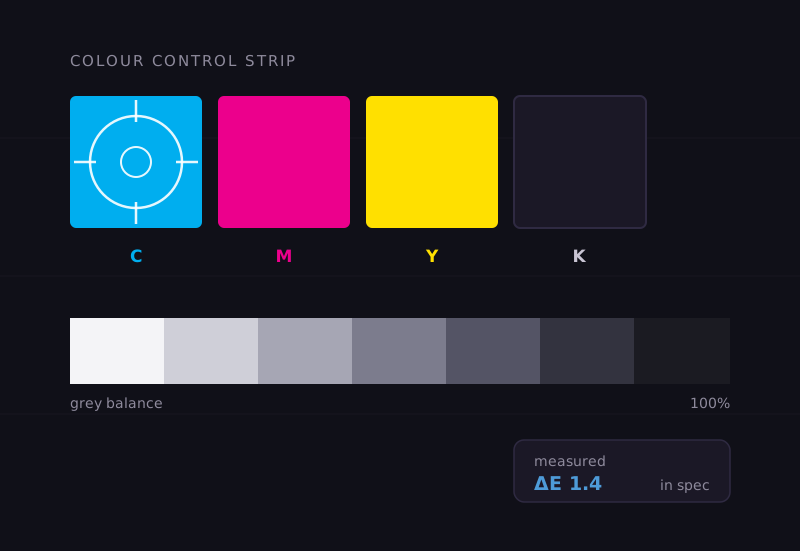
Colour accuracy in flexo is primarily controlled through the anilox roll, which meters ink delivery with precision. This is combined with tight press controls, high-quality photopolymer plates, and modern closed-loop colour management systems for consistent results.
Water-based inks are preferred for food packaging due to lower VOC emissions and compliance with food safety regulations. Solvent-based inks offer stronger adhesion and faster drying on certain substrates but require controlled handling and proper ventilation.
Gravure has traditionally held an edge for extremely fine detail and photographic reproduction. However, advances in digital plate-making and ink technology have significantly closed this gap, making modern flexographic printing a strong alternative to gravure in many high-quality applications.
Keep reading
Questions about this guide?
Send me your question on WhatsApp and I will get back to you personally.